
In busy healthcare, precision is essential to efficiency. In OB/GYN, accurate billing and coding can be the difference between financial security and excellent patient care. The precision of OB GYN billing and coding is like composing a symphony of care. Services range from regular prenatal checkups to complex surgical treatments. However, Each note and medical treatment must be coded according to OB GYN billing and coding guidelines to ensure proper reimbursement and maintain the highest level of patient care.
OB/GYN services are unusual in that their breadth and complexity present coding challenges. In this complex system, each process, examination, and intervention needs its own precise coding to appropriately reflect the service provided. Codes aren’t just numbers—they’re essential for documenting and reimbursing all care.
In this complicated world of healthcare, where precision is key and the stakes are great, OB GYN billing and coding is more than paperwork. The goal is to trace each patient’s path, describe each service, and repay each claim.
Understanding OB GYN Billing and Coding
Medical billing and coding translate diagnoses, procedures, and treatments into standardized code sets used across the healthcare system. In OB/GYN, this process can be more complicated because of the variety of services involved and the clinical detail required to support them.
Practices must often code for prenatal care, ultrasounds, Pap tests, biopsies, surgeries, and follow-up care, all while keeping up with evolving payer rules and documentation standards. When coding is not handled carefully, the result can be denied claims, delayed payments, and compliance concerns.
A strong understanding of Ob GYN Billing and Coding Guidelines helps practices protect reimbursement and improve billing consistency across the full scope of women’s healthcare services.
If your practice is working to improve compliance and reimbursement under Ob GYN Billing and Coding Guidelines, HMS Group Inc. can help you identify where coding gaps, documentation issues, or workflow inefficiencies may be affecting your revenue cycle. A focused review can uncover problems before they turn into denials or payment delays.
Key Elements of OB GYN Billing and Coding
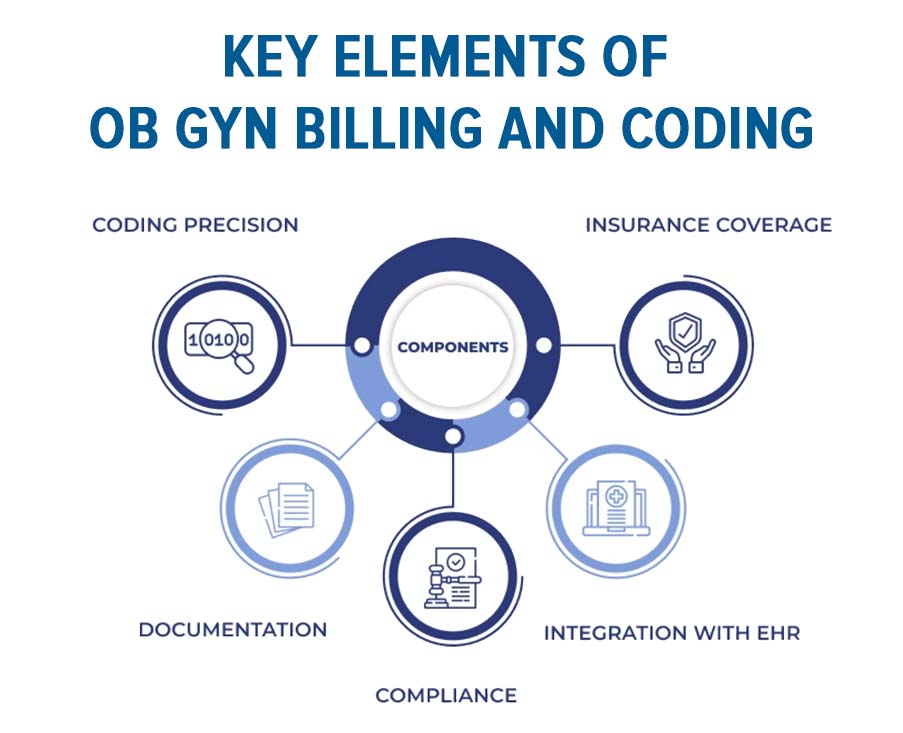
Obstetrics and Gynecology (OB GYN) includes many important women’s healthcare treatments. To achieve appropriate billing and reimbursement, these operations, from simple exams to complex surgery, require thorough coding.
Labor and Prenatal Care
Routine prenatal care, a cornerstone of OB GYN services, requires coding for each checkup, screening, and counseling session. Labor and delivery procedures, including monitoring and interventions, require correct coding.
Diagnostic and Gynecological Procedures
Ultrasounds, Pap tests, colposcopies, and biopsies are common in gynecology. Each step needs detailed criteria to code these tests accurately.
Surgical Procedures
OB GYN surgeries including cesarean sections and hysterectomies complicate classification. Each surgery needs precise coding to gather details and facilitate invoicing.
Specific Codes in OB GYN Billing
CPT Codes
ICD-10 Codes
ICD-10 codes give diagnoses and procedural justifications to supplement CPT codes. Accurate invoicing requires congruence between medical necessity and services performed.
HCPCS Codes
HCPCS codes are important for Medicare and Medicaid OB GYN services. These codes appropriately document and bill program-covered services.
Documentation Accuracy Matters
OB GYN billing and coding depend on precise documentation. Complete records support selected codes and demonstrate the need and amount of care. Comprehensive documentation improves patient care by facilitating provider communication and billing compliance.
Challenges In OB GYN billing and coding
- Practitioners struggle to code and bill OB GYN services due to their complexity. From simple checkups to complicated surgery, selecting the right codes needs finesse.
- Detail-oriented documentation complicates matters. Insufficient documentation might lead to inaccurate coding, affecting reimbursement and compliance.
- Keeping up with changing regulations is difficult. Regular billing and code adjustments require ongoing education and adaptation to avoid noncompliance.
- Claims denials and audits might result from coding errors caused by human error or misunderstanding requirements. These mistakes can cost a practice money and reputation.
Best Practices for OB GYN Billing and Coding
- Encourage thorough and precise documentation. Clear and detailed records support codes and justify care.
- Regular Education and Training
- Promote ongoing training for practitioners. Keeping up with coding changes and attending workshops or seminars helps ensure compliance.
- Use coding and billing software. Electronic health records (EHRs) or practice management systems help streamline and eliminate errors.
- Perform regular internal audits and reviews to spot and fix coding errors and compliance issues. This method ensures accuracy and reduces hazards.
- Promote communication among coding and billing workers. Clear communication and collaboration aid correct documentation and coding.
Reimbursement and Financial Impact
In OB GYN practices, accurate billing and coding affect reimbursement. Doctors are reimbursed for services that are properly documented and coded. Codes that accurately reflect services delivered speed up reimbursement and prevent denials.
Financial Impact of Errors or Noncompliance
Billing and coding errors can be costly. The practice loses revenue due to claim denials or delays due to inaccurate coding. Non-compliance with regulations can lead to penalties, fines, or legal action, affecting the practice’s finances and reputation.
Conclusion
Following Ob GYN Billing and Coding Guidelines is essential for any practice that wants to maintain compliance, improve reimbursement, and support long-term financial stability. In a specialty where services are varied and documentation requirements are detailed, coding precision matters at every stage of the revenue cycle.
Practices that prioritize strong billing habits, accurate documentation, ongoing education, and regular review are in a much better position to reduce denials and strengthen collections. Better coding does not just protect revenue. It supports better operations and a more dependable patient care experience.
If your team wants a more reliable approach to Ob GYN Billing and Coding Guidelines, HMS Group Inc. can help you build a cleaner and more efficient billing process. Connect with us for a tailored consultation to improve coding accuracy, reduce avoidable claim issues, and support healthier financial performance for your practice.
FAQs
These standards and principles help document and code Obstetrics and Gynecology procedures and services. They accurately depict medical services for billing and reimbursement.
Proper reimbursement, practice financial stability, and patient care depend on accurate billing and coding. They classify medical services for insurance claims and billing accuracy.
Services from routine checkups to sophisticated procedures require exact coding, making coding complicated. Compliance with changing regulations and adequate record keeping are also difficult.
Accurate coding helps healthcare providers document medical care and track patient progress. This improves medical team communication and provides prompt patient care.
Continuous education, coding updates, rigorous documentation, and best practices are essential. Training, technology, and audits ensure compliance.