A payer says your physician is approved. Your billing team still receives an enrollment rejection. The missing piece could be the group affiliation, the payer product or the service location.
If you are comparing medical credentialing services Miami practices can depend on, look closely at what the company delivers beyond an application. HMS USA helps organize provider files, manage payer enrollment and connect participation records with the information your practice needs for billing.
For a Miami-Dade physician, clinic owner or practice manager, the goal is practical: know which providers are recognized under which agreements, at which locations, and what remains unresolved.
Medical Credentialing Services Miami Practices Should Expect
| Activity | Question it answers | Evidence your practice needs |
|---|---|---|
| Credentialing | Does the clinician meet the payer’s qualification standards? | The payer’s credentialing determination |
| Enrollment | Does the program or payer recognize the individual or entity for the applicable billing arrangement? | Approved enrollment and relevant identifiers or affiliations |
| Contracting | Which organization, products and payment terms does the agreement cover? | Executed agreement, applicable terms and participation confirmation |
| Hospital privileging | Which clinical services may the practitioner perform at the facility? | Facility approval specifying privileges |
Original Medicare and Medicare Advantage
First Coast Service Options, Inc. (FCSO), administers Medicare Parts A and B for Florida, under Jurisdiction N. Certain provider and supplier categories with special enrollment arrangements, require the appropriate contractor route.
In a doctor’s office, the case may involve individual enrollment, as well as organizational enrollment and reassignment of benefits to the group, as applicable. PECOS supports both enrollment and reassignment actions. An NPI record, in and of itself, is not sufficient to confirm that the arrangements have been approved.
Participation in a Medicare Advantage plan requires a separate evaluation of the plan’s requirements and the nature of the plan’s network. Original Medicare enrollment does not mean an arrangement with all Medicare Advantage plans.
Florida Medicaid and Managed Care Plans
The enrollment in Florida Medicaid is processed through the Agency for Health Care Administration (AHCA). The application must contain the correct specialty and sub-specialty codes, as well as supporting documentation and certifications as requested.
Each type of participation has a different intent. Referring or ordering participation does not allow you to bill for covered services. A practitioner’s group membership is also relevant when a provider participates in a billing organization.
Full enrollment is often used for providers that wish to receive direct fee-for-service reimbursement. Limited enrollment is usually used by eligible providers for managed care participation, provided program rules allow it. The health plan, of course, has its own requirements for participation.
Background checks, site visits, and documents must be assessed as to whether they are relevant and sufficient for the particular requirements. A proposal should name the work to be done rather than just promise to do “all compliance.”
Florida Blue
Florida Blue differentiates provider registration from provider application for network participation. CAQH is the preferred source of practitioner data, but other organizational applicants may have different requirements.
The practice should verify which network and product the request covers. Florida Blue also states that submitting an application does not guarantee network inclusion.
Aetna and UnitedHealthcare
Aetna separates credentialing from network contracting and offers different application pathways for professional and organizational categories. A completed CAQH profile does not replace its participation request.
UnitedHealthcare’s join-network instructions point applicants to the onboarding route that applies to them. UnitedHealthcare’s guidance states that receiving a contract for review does not establish credentialing approval or network participation. Group affiliation and recognition in its systems still need to be confirmed.
Cigna Healthcare and Humana
Cigna Healthcare accepts authorized CAQH data for credentialing review. Behavioral health applicants should check the Evernorth pathway for behavioral health, as network participation may not extend to behavioral health.
Humana provides participation pathways for professional and organizational providers. The application should identify the applicable network and product; recognizing the insurer’s name does not indicate participation.
A Provider Document Checklist That Prevents Rework
The best intake checklist captures which documents pertain to the practitioner and which pertain to the organization. It should identify exceptions for which additional information may be required.
For the practitioner, the file may contain:
- The applicable Florida professional license and license verification.
- The practitioner’s NPI and appropriate taxonomy data.
- The practitioner’s education, residency, fellowship and/or certifications, as applicable.
- The practitioner’s work history and information as requested by the payer.
- Professional liability coverage and claims disclosure.
- The practitioner’s DEA registration, if applicable.
- Hospital coverage or affiliation, if requested.
- Complete responses to all professional and disciplinary disclosure questions.
The organization may need the W-9, legal business name, tax ID, organizational NPI (where applicable), ownership info, service addresses and authorized signer info. Banking documents should only be included in the file when the relevant payment or enrollment setup requires them.
Florida’s Dept of Health verifies professional licenses. For organizations, the AHCA clinic licensure or exemption should be analyzed in conjunction with the actual business structure and services. An individual’s professional license will not answer every question.
Maintain consistency in original records
Ensure that the spelling of Suite numbers and entity names on the W-9 are consistent with what is in the NPPES record, CAQH profile, and payer forms. Also, ensure that entity Tax IDs and Provider Classifications are consistent across the forms. There are different places on an application for a trade name and legal business name.
Turn Application Activity Into Verifiable Progress
If a true discrepancy exists, correct the source of the error. Making an incorrect entry in each system creates consistency but not accuracy.
Turn “Submitted” Into Actionable Information
The term “submitted” is an action word. It does not convey the status of an application to your practice.
A useful workflow makes each request owned by a person and defines the evidence required for that request to be advanced to the next level.
Validate the Provider File
Verify the locations, entities and plans. Compare the evidence to what the payer requires and forward unresolved disclosures to the practitioner. The person who is responsible for the information should be asked the material questions.
Complete CAQH and authorize access
Complete CAQH and authorize access to the requisite organizations. The CAQH profile management process enables participants to review their entries, upload supporting documents, and complete attestations. DataSpring’s Provider Data Portal supports this process. Completing a profile and obtaining a payer’s credentialing decision are decoupled in this process.
The service agreement should name the staff who will be completing the attestations and/or authorizations and specify the access controls for the account.
Submit through the correct channel
Record the date the application was submitted, the reference number and any accompanying documentation. If information is lacking, note what is missing in detail, who needs to provide it, and to which payer request it pertains.
A closed panel will be addressed differently from an incomplete application. Pertain to the specialty, geography, and product affected. Clarify what is required by the payer; also identify how the payer would resolve the inconsistency. A network-need review may be a means to approve otherwise denied access.
Verify participation and hand off to Billing
The Completion File should contain the applicable agreement, product coverage determination, and evidence of provider relationship to the billing entity/location.
The Billing Team should also receive the appropriate identifier, as well as any required electronic transactions. EFT is used to move funds. ERA is used to provide remittance advice. Their participation does not give them network access.
Scheduling should receive the same. Participation should also be verified through a payer directory.
Clear the Way for Your Applications
Contact HMS USA with your provider roster, practice locations and payer plans targeted. We can examine your application process, find gaps and set responsibilities for the applications within scope.
Credentialing Costs: Compare the Work Behind the Quote
Medical credentialing fees depend on the number of providers, payer requests, billing entities, locations and service tasks. A single headline price rarely explains the whole engagement.
For HMS USA, the relevant figure is an itemized quote for your practice’s agreed scope. A general price range cannot establish what your project will cost.
| Quote component | Detail to identify |
|---|---|
| Provider applications | Whether the charge applies per clinician, payer product or application |
| Group and entity work | Whether organizational enrollment and group affiliations are included |
| CAQH support | Whether profile creation, corrections and maintenance are separate services |
| Government programs | Whether Medicare and Florida Medicaid applications have separate line items |
| Contract assistance | Whether support covers routing, follow-up or reimbursement discussions |
| Application problems | Whether deficiency responses, corrections and resubmissions are included |
| External charges | Which government, verification or other third-party fees the practice pays |
| Completion criteria | Which documents demonstrate that the contracted work is finished |
For example, 2 clinicians x 6 payer products = 12 requests. This does not indicate the presence of group contracting, additional offices or government enrollments.
Make sure you are comparing quotes for the same services and products. The difference in quote price may compensate for work your staff most needs, such as resolving group affiliation issues or obtaining participation confirmation.
Establish the terms for closed panels and withdrawn requests. Paying for application completion does not guarantee payer acceptance. The agreement should describe the work completed and the service charges if a payer target network does not accept the practice.
Enrollment Problems That Need More Than Another Application
The following examples illustrate what questions a credentialing partner should investigate rather than the claimed HMS USA client results.
A clinician is approved but not recorded in the group record
A specialty practice in Doral receives notification that their physician has passed credentialing. Claims under the practice’s tax ID are denied for provider enrollment issues.
Is the payer group practicing organization recognizing the physician in question under the same product, location and group? The team should review the participation documents to see if there are any discrepancies with the billing arrangement and work to obtain clarification for the missing affiliation.
Re-sending professional documents may not resolve the issue. The request must be sent to the department that is responsible for the true discrepancy.
The practice focuses on the wrong behavioral network
A therapist in Coral Gables might have seen an insurance company name from across the country on the patient’s card, but the behavioral health benefit would be administered via a different network.
For Behavioral Health Billing Services coordination, the practice needs to identify the benefit administrator, provider type, and proper behavioral health enrollment process. The practice will also need to verify if individual credentialing is needed for each provider or if a group process is accepted by the payer.
A change of location results in fragmented records
A practice opens an office in Aventura. Its website and billing systems reflect the new address, but payer participation records reflect the other office.
Inconsistent records require the team to request and review each applicable payer record. Changes to the website do not indicate that a new location has been approved. The practice should retain a copy of payer confirmation and change the website and other records to reflect the new location.
Variety of Requirements During Credentialing
There are different requirements for recredentialing, revitalization of government enrollment and renewal of professional licenses. A CAQH attestation does not fulfill all three.
Assign responsibility for each requirement and update of provider information. A new group practice, additional location, change of ownership or revised profession status can affect many records.
The NPPES and Medicare enrollment processes are separate. CMS states that changes to an NPI record do not change the Medicare enrollment record.
The practice should maintain a restricted repository of a complete set of provider attestations, agreements, approvals, payer correspondence, and contact information to resolve an issue. The practice should be able to retrieve the records without depending on a single employee or vendor.
Maintain confidentiality of sensitive information and secure access to accounts
Credentialing files may contain personal identifiers and/or bank information. Ensure access is limited to authorized staff and use the account permission levels provided by the platform. Do not send master credentials in an ordinary intake email.
If the engagement includes any Protected Health Information (PHI) for a HIPAA-covered entity and creates a business associate relationship, then a business associate agreement (BAA) is required. Credentialing information should not be classified as PHI.
The service agreement should also describe how the practice will have access to its accounts and how it will receive its records if the service engagement ends.
Choose a Partner Using Evidence You Can Inspect
A company serving Miami should understand Florida enrollment and payer requirements and the practice’s payer relationships. A Miami address does not provide evidence of this understanding and remote support requires clear accountability.
Consider the work product. A good application report should describe the provider, entity, location, product, submission reference, review status, unresolved items and the person responsible to resolve the item.
Ask relevant questions, including:
- Can the company explain the application route for your provider type?
- Will the company distinguish network acceptance from credentialing approval?
- What is the evidence the employee completed the task?
- Who on the company’s team takes the lead for payer questions and disclosure for the provider?
- What tasks will remain for staff to do?
- Can you see a sample, redacted report?
- Will your practice retain access to its applications and agreements?
If a vendor provides an approval percentage, ask what it measured. A result achieved by the combined total of submitted applications, accepted files and activated participation could overstate the figure.
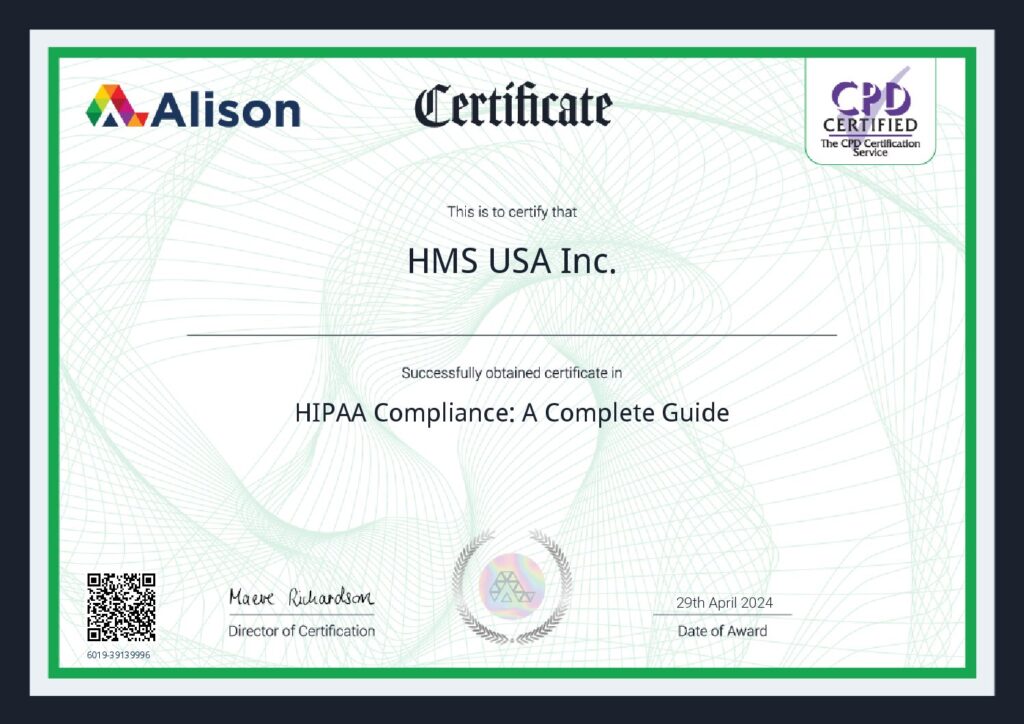
Documentation of named staff, relevant references and case studies strengthen a firm’s position. These are verifiable. Posting a general HIPAA statement or an insurer’s logo doesn’t establish accreditation, endorsement or a guaranteed result.
Connect Credentialing with Billing through HMS USA
HMS USA has credentialing, payer enrollment and medical billing services. A Miami practice would benefit from connecting these services around the same provider list, billing units, practice locations and target products.
The work scope can include document creation and maintenance, CAQH processes, payer submissions, responses, recredentialing and coordination with billing. Work supporting contract negotiations, inheriting record corrections and administration of licenses should also be scoped and defined.
Your staff should be able to explain what has been submitted and what is required by the payer to participate. This is critical in providing a solo physician the means to oversee enrollment projects. This also gives group practices a means to effectively serve multiple providers.
When Medical Credentialing Services in Miami are selected, the scope and outcome are clearly defined. Payer acceptance and participation is out of the control of the service partner. It is critical your service partner keeps the work and unresolved questions visible.
Create an Enrollment Strategy for Your Practice
Speak to HMS USA about your providers, payers, and billing issues. Have a scope that will detail the requirements of the application process and participation proof.
Frequently Asked Questions
Can a physician join an insurance network with only an NPI?
No. An NPI identifies the provider. The insurer or program still applies its enrollment, qualification and participation requirements. For group billing, the relevant clinician-to-entity relationship may also need approval. Confirm the actual payer records rather than treating the identifier as proof of participation.
Which factors determine credentialing service fees in Miami?
Fees depend on provider count, payer products, entities, locations and included tasks. Profile corrections, group affiliations, government enrollment and maintenance can affect the quote. Compare itemized scopes and completion criteria. A fee for submitting an application does not necessarily include participation verification.
Is a complete CAQH profile enough to become in-network?
No. CAQH supplies professional information to authorized organizations. A payer still needs the applicable participation request, credentialing review and contracting or enrollment actions. The practice should obtain confirmation covering the correct provider, network product, billing entity and location.
Must a Florida Medicaid provider also join managed care networks?
A provider seeking participation in a Medicaid managed care network must meet the relevant state enrollment requirements and the plan’s participation requirements. State enrollment does not automatically create a plan contract. The appropriate enrollment category depends on the provider’s role and intended billing arrangement.
Can a credentialing company guarantee insurance panel acceptance?
No. Payers decide whether to accept applicants based on their requirements and network needs. A service company can prepare the file, address deficiencies and manage communications. It should explain closed panels and other restrictions without presenting application submission as a guarantee of acceptance.
Can HMS USA support an individual practitioner and a group practice?
HMS USA’s credentialing and enrollment work can be scoped to either structure. The assessment should identify the clinicians, legal entities, locations and payer products involved. Group practices also need clarity on individual approvals, group contracts, affiliations and the information required by billing staff.