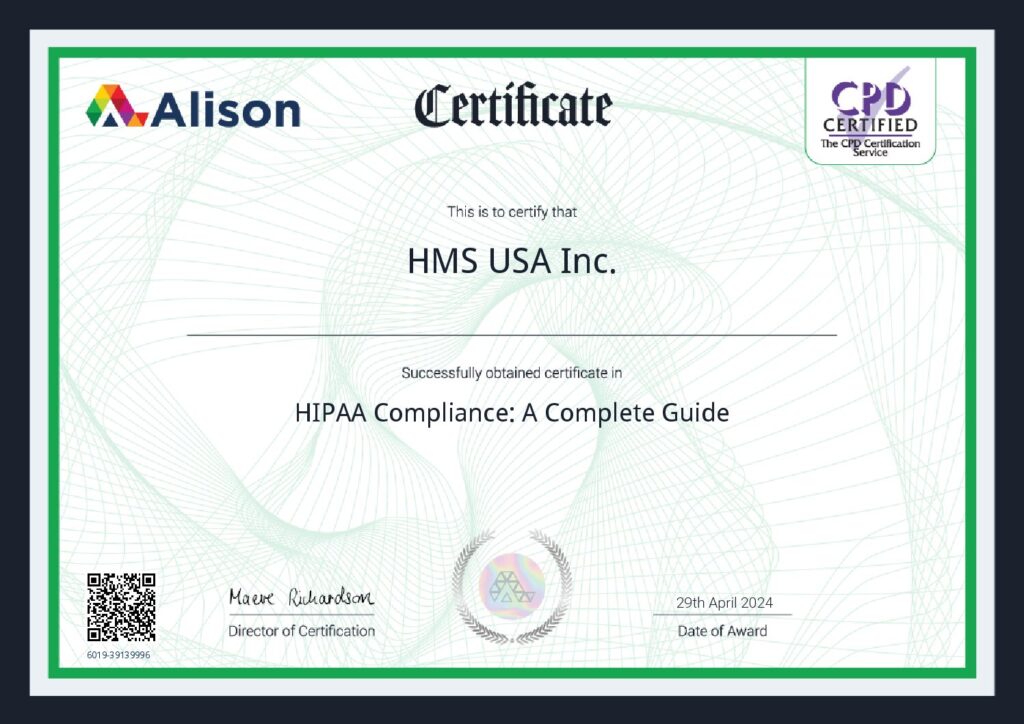
Large RCM companies can certainly offer economies of scale, but that’s not the most important consideration for an independent practice, specialty group, or growing health care organization.
In Texas, scale often takes a back seat to experience. To be successful in Texas, a billing company must have personnel who understand revenue cycle management specific to the specialty, and also have the knowledge to work Texas Medicaid and other payer rules.
Texas provides little latitude for billing companies to follow up on accounts receivable. The Texas Medicaid Provider Procedures Manual requires that Texas Medicaid claims be filed and paid within 95 days of the date of service, unless a waiver is granted. Each of the 16 MCOs in Texas has their own set of rules and mandated procedures for administration. CMS also modifies the National Correct Coding Initiative Edits on a regular basis.
These factors create an environment in which many health care practices prefer to engage a smaller, more experienced health care RCM company over a larger, national company.
The health care RCM companies that were profiled in this report represent the highest evaluation of the buying criteria as determined by the author.
While it is the hope of a health care organization to engage the best RCM company available, it is the stark reality that small, single location behavioral health clinics have very little in common, from an RCM perspective, with a hospital or a multi-location ambulatory surgical center.
Quick Comparison of Privately Owned Healthcare RCM Companies Serving Texas
| Company | Primary Strength | Best Suited For | Key Services |
| HMS USA | Broad, customizable RCM and administrative support | Physician practices, specialty groups, growing healthcare organizations | Medical billing, coding, RCM, credentialing, denial management, A/R, audits, front-office support |
| Professional Credentialing Service | Credentialing and payer enrollment specialization | New practices, growing groups, behavioral health and providers adding payer networks | Provider enrollment, CAQH, Medicare, Medicaid, commercial payer enrollment, recredentialing |
| Resilient MBS | Full-service billing combined with credentialing and front-office support | Small-to-midsize practices and specialty providers | Billing, coding, RCM, credentialing, audits, denial management, A/R, front-office services |
| Right Medical Billing | Hospital, ER, urgent care and complex A/R expertise | Hospitals, freestanding ERs, urgent care and larger organizations | Billing, coding, A/R, credentialing, contracting, chart audits, DRG review, OON negotiation |
| Plutus Health | Technology-enabled and automation-heavy RCM | Behavioral health, ASCs, surgical groups and enterprise/multi-location organizations | Billing, coding, denial management, credentialing, prior authorization, A/R, analytics and AI-enabled workflows |
1. HMS USA
HMS USA is a private healthcare services company. Their offices around the country provide medical billing and other revenue cycle services.
HMS USA has services that can free a medical practice’s staff to do other things by handling items such as coding, credentialing, denial management, and collections. They can also perform various office functions and billing services, and help with other issues involving the revenue cycle.
Practices are usually interested in services that deal with a number of different issues because revenue shortages are usually caused by a number of different problems. Claims may be coded and ready to be sent, but if there was no check to see if the patient was eligible for coverage, the claim may still not be paid. Claims may not be collected because no one was assigned to follow up on the collections.
An effective revenue cycle management partner helps practices identify those issues.
Key Services
HMS USA’s publicly described services include:
- Medical billing and coding
- Healthcare revenue cycle management
- Provider credentialing and enrollment
- Denial management
- Accounts receivable follow-up
- Medical billing audits
- Patient billing support
- Medical front-office assistance
- Chronic care management support
- Remote patient monitoring billing support
The company also describes customizable aging reports and revenue-cycle analysis as part of its broader approach.
Specialty and Practice Fit
HMS USA is better suited to organizations looking for broad support rather than a single outsourced billing function.
Its service model can fit:
- Independent physician practices
- Multi-provider practices
- Specialty clinics
- Behavioral health organizations
- Internal medicine and primary care
- Urgent care
- Surgical practices
- Cardiology and neurology practices
- Hospitals and larger groups requiring broader RCM support
Practices with multiple operational problems—credentialing delays, aging A/R, recurring denials, staffing pressure, and claim-management gaps—are likely to get more value from this type of model than a practice looking only for a clearinghouse or software platform.
Why HMS USA Stands Out
The strongest argument for HMS USA is breadth with flexibility.
Instead of forcing every practice into the same workflow, the company positions its RCM services around individual practice requirements. Its public service materials cover the revenue cycle from patient and insurance data through coding, claims, payment activity, aging receivables, credentialing, and administrative support.
That makes HMS USA particularly relevant for healthcare organizations trying to consolidate several outsourced functions under one RCM relationship.
For Texas practices, that full-cycle view is important. TMHP filing deadlines, payer-specific rules, credentialing status, documentation quality, and denial follow-up can all affect whether an otherwise legitimate service converts into collected revenue.
Best For
Best suited for: physician practices, specialty groups, and healthcare organizations that want an end-to-end RCM partner rather than a billing-only vendor.
HMS USA may be especially attractive to practices that need medical billing, credentialing, denial management, and administrative support managed together instead of through separate vendors.
2. Professional Credentialing Service
Professional Credentialing Service has a different business model than its competitors on our list. For some medical groups, this specialization may be a limitation.
However, for practices looking for assistance in properly navigating the credentialing process, Professional Credentialing Service has strong reviews and is highly rated.
For successful in-network provider participation, several administrative tasks must be completed, including accurate and timely demographic information, payer enrollment, CAQH maintenance, and Medicare and Medicaid enrollment, and group practice affilliations. Continuous Quality Improvement (CQI) and recredentialing activities also must be accomplished.
Professional Credentialing Service manages these credentialing processes.
Key Services
Its published services include:
- Provider enrollment
- Payer credentialing
- CAQH profile management
- Medicare credentialing
- Medicaid enrollment
- Commercial payer enrollment
- Recredentialing
- License and credential maintenance
- Demographic and practice updates
- Payer application follow-up
The service is structured around getting providers enrolled and keeping their payer information current.
Specialty and Practice Fit
Professional Credentialing Service lists support for:
- Primary care
- Internal medicine
- Behavioral and mental health
- Urgent care
- Walk-in clinics
- Physical, occupational and speech therapy
- Rehabilitation practices
- Pediatrics
- Women’s health and OB/GYN
- Surgical and specialty practices
This makes it particularly relevant for new healthcare businesses and practices onboarding multiple providers.
Why It Stands Out
While some RCM companies charge extra to include credentialing services in their packages, Professional Credentialing Service bases its offerings on credentialing.
Those services can be an important means of resolving a stalled revenue cycle. Some providers are unable to bill certain payers due to wrong or out-of-date enrollments, or enrollments tied to incorrect payers.
There are differences buyers need to know, however. The Professional Credentialing Service website, which is open to the public, is geared more toward credentialing services as opposed to RCM services. Thus, a prospective client should contact the company to learn which billing services the company would provide as an RCM partner.
Best For
Best suited for: new practices, solo providers, behavioral health clinicians, medical groups adding providers or locations, and organizations dealing with payer-enrollment backlogs.
It is a particularly logical choice when credentialing is the bottleneck preventing revenue from moving.
3. Resilient MBS
Resilient MBS is a Texas-based medical billing and RCM company that works with medical practices across the country.
They provide billing services, and additionally offer credentialing and other front-office work, as well as administrative and staffing services.
Because of the additional services they provide, they are larger and more comprehensive than a medical billing company.
Resilient MBS is a full service medical billing and RCM company. They provide credentialing services and can staff medical practice’s front-offices. They also provide a number of other services. Because of their extensive service offerings, they can be a more comprehensive company than one that services only end at the submission of a medical claim.
Key Services
Resilient MBS publishes services that include:
- Medical billing
- Medical coding
- Revenue cycle management
- Provider credentialing
- Medical billing audits
- Denial management
- Accounts receivable follow-up
- Front-office assistance
- Chronic care management support
- Remote patient monitoring support
- Patient and administrative billing workflows
Its website also identifies specialty-specific billing support across areas such as mental health, oncology, cardiology, urology, OB/GYN, ENT, wound care, and other medical specialties.
Specialty and Practice Fit
The service structure appears particularly well suited to small and midsize organizations that want outside staff to become an extension of their existing practice.
Potential fits include:
- Behavioral and mental health
- Internal medicine
- Primary care
- Cardiology
- Oncology
- Urology
- Wound care
- OB/GYN
- ENT
- Specialty physician groups
Credentialing appears to be a meaningful part of the company’s offering rather than an afterthought, which can be useful for growing groups adding clinicians or payer contracts.
Why Resilient MBS Stands Out
Resilient MBS uniquely combines the RCM and administrative support services.
A small practice may not need enterprise analytics or a hospital revenue integrity program. They may need assistance verifying benefits, submitting claims, following up on denials, and collections. They may also require help with credentialing and/or other activities that reduce the practice’s reliance on already strained staff.
Resilient MBS has the potential to provide outsourced revenue cycle support to small to medium sized practices that have outgrown in-office billing and require more support than basic revenue cycle services.
Best For
Best suited for: small-to-midsize practices, behavioral health organizations, specialty clinics, and providers that want billing, credentialing, and administrative support under one vendor.
4. Right Medical Billing
Right Medical Billing is a privately owned RCM company located in Richmond, Texas. They offer services further downstream than most private billing companies.
Although focused on small practices, Right Medical Billing can process large, complex claims found in large, multi-site facilities and institutional billing.
Right Medical Billing’s Web site shows cases across the healthcare spectrum from hospitals to clinic to private practice to emergency to urgent care to imaging to wellness centers.
Right Medical Billing is not concentrated in the physician office billing like many other RCM companies.
Key Services
Right Medical Billing lists services including:
- Medical billing and coding
- Complete revenue cycle management
- Accounts receivable management
- Credentialing and payer contracting
- Prior and retro authorization
- Eligibility verification
- Patient billing
- Denial management and appeals
- Out-of-network negotiation
- Independent dispute-resolution support
- Chart auditing
- DRG review
- Coding and documentation review
Its RCM workflow publicly covers provider enrollment, registration, eligibility, coding, charge entry, claim scrubbing, payment posting, denials, A/R, patient billing, and reporting.
Specialty and Practice Fit
Right Medical Billing has a noticeable institutional-care focus.
The company specifically works with:
- Hospitals
- Healthcare systems
- Freestanding emergency rooms
- Micro-hospitals
- Urgent care centers
- Physician practices
- Imaging centers
- Multi-facility organizations
Its chart-auditing and DRG-review services also make it more relevant to organizations dealing with inpatient documentation and reimbursement complexity.
Why Right Medical Billing Stands Out
Its ability to address the complexities of provider reimbursement is its strongest asset.
While all practices require clean claims and provider credentialing, hospital and emergency medical service practices experience a greater set of challenges including but not limited to the accuracy of DRGs and other documentation, out-of-network reimbursement, under-reimbursement, complex AR, authorization, and negotiated rates with payers.
Right Medical Billing is equipped to handle all of these challenges and more.
A small, two-provider practice may not experience many, if any, of the above challenges. Larger, more complex practices and service delivery systems (i.e. hospitals, urgent cares, and emergency medical service practices) would benefit from the resources and services Right Medical Billing offers.
Best For
Best suited for: hospitals, freestanding emergency rooms, urgent care groups, larger physician organizations, and facilities with complicated A/R, contracting, or out-of-network reimbursement.
5. Plutus Health
Plutus Health is a privately held, Dallas-based RCM company with a distinctly technology-heavy operating model.
Where several vendors on this list lead with people and service teams, Plutus Health combines RCM specialists with automation, analytics, and its own AI-focused technology.
Its public service scope is also broad enough to qualify as a true full-cycle RCM operation.
Key Services
Plutus Health describes services covering:
- Medical billing
- Medical coding
- Payment posting
- Denial management
- Credentialing and enrollment
- Eligibility verification
- Prior authorization
- Charge entry
- Accounts receivable follow-up
- Revenue integrity
- Patient statements
- Out-of-network negotiations
- Independent dispute resolution
- RCM analytics
- Coding audits
The company also uses automation across areas such as eligibility, claim scrubbing, coding, denial workflows, and A/R management.
Specialty and Practice Fit
Plutus Health has particularly visible specialization in:
- Behavioral health
- Applied behavior analysis
- Substance use disorder treatment
- Outpatient psychiatry
- Ambulatory surgery centers
- Surgical hospitals
- Freestanding emergency rooms
- Multi-location physician practices
- Orthopedics
- Cardiology
- Ophthalmology
- Pain management
- Gastroenterology
- Urology
That gives it stronger specialty depth than a generic billing company serving every possible practice through the same operating workflow.
Why Plutus Health Stands Out
While automation is clearly important, the differences in the approaches each company takes with respect to scope may be just as important.
Plutus Health has created a product that automates processes and provides additional reports and analysis beyond simple claims outsourcing, providing clients a true end-to-end RCM solution.
Additionally, Plutus Health’s location in Dallas gives it access to clients in Texas, and its product focus gives it the ability to cross-sell its products to clients in behavioral health, ASCs, and other markets.
While discussing potential products Plutus Health may offer clients, it is crucial for clients to understand how much of the process can be completed without human interaction, who and how quickly are exceptions reported, and what types of reports and analyses does the vendor provide. Understanding these items are more helpful than simply understanding if a vendor employs artificial intelligence (AI).
Best For
Best suited for: behavioral health platforms, ASCs, surgical practices, freestanding ERs, multi-location groups, and larger organizations looking for technology-enabled RCM.
What Texas Practices Should Compare Before Choosing an RCM Company
The name on the proposal matters less than the operating model behind it.
Before changing RCM companies, Texas practices should ask each vendor the same questions.
Who Owns Eligibility and Prior Authorization?
A denial that could have been prevented before the patient arrived is usually more expensive to fix later.
Ask whether eligibility and authorization are included, optional, or still the practice’s responsibility.
How Is Texas Medicaid Managed?
TMHP’s current provider manual generally requires in-state claims within a 95-day filing window, subject to specified exceptions. Texas Medicaid managed-care plans can also have different administrative processes for authorization, referrals, and claims.
A Texas RCM partner should be able to explain how those deadlines and payer-specific requirements are tracked rather than simply saying it “knows Medicaid.”
Who Handles Coding Edits?
CMS’s NCCI program uses Procedure-to-Procedure and Medically Unlikely Edits to reduce improper coding and payment, and edit files are updated periodically.
Ask how the vendor keeps coding rules current, who reviews modifier use, and what happens when documentation does not support the code originally selected.
What Happens to Old A/R?
Some vendors take responsibility only for new dates of service.
That leaves the practice paying one company for current claims while internal staff or the old billing company continues chasing aged balances.
Define the cutoff date, A/R ownership, appeal responsibilities, and reporting before the transition starts.
Is Credentialing Actually Included?
“Credentialing support” can mean anything from sending a checklist to fully managing CAQH, Medicare, Medicaid, commercial payer applications, follow-ups, EFT/ERA, demographic updates, and recredentialing.
Get the exact scope in writing.
Who Will Be Your Day-to-Day Contact?
Private ownership alone does not guarantee personalized service.
Ask whether you receive a dedicated billing manager, how often performance reviews occur, who handles escalations, and how quickly the team is expected to respond.
Which Texas RCM Company Is the Right Fit?
The kind of practice being considered is very important in evaluating the response to the question.
An up and coming behavioral health practice may get quicker results partnering with Professional Credentialing Service for credentialing help.
An emergency department may benefit more from Right Medical Billing, which has a facility-based model.
A behavioral health or surgery center (ASC) platform may benefit from the automation and tools provided by Plutus Health.
Resilient MBS offers credentialing, as well as billing and practice management services.
HMS USA offers a broader range of services and may be better positioned for practices desiring an integrated, single source solution for a wide range of practice and revenue cycle needs.
Long term relationships may be more beneficial to practices with higher levels of service integration.
Choosing the best vendor for a practice would require a detailed look at various aspects of the practice, including the payer mix, accounts receivable collection time frames, denial reason codes, the number and specialty of providers, the number and type of services and procedures performed, the EHR and the number of claims processed per month.
Then compare the answers.
Why Consider HMS USA for Healthcare RCM in Texas?
HMS USA provides comprehensive solutions for health systems looking to partner with a vendor that will not fragment their revenue cycle.
HMS USA has experience in all aspects of the revenue cycle including, but not limited to, medical billing and coding, credentialing, denial management, A/R follow-up, and various other areas. With this in mind, HMS USA can customize its solution to meet the specific needs of a practice.
For practices in Texas, this means partners can address the most pressing issues in the revenue cycle (e.g. denials, lagging reimbursements, staffing, and/or inconsistent revenue cycle operations) as opposed to adjusting their operations to match a given solution.
Practices evaluating privately held RCM businesses in Texas should examine their revenue cycle and determine where resources are being consumed (i.e. where are the holes in the revenue cycle) and determine which vendor best addresses these areas. After evaluating the above, practices should then determine which RCM vendor provides the best overall value.
HMS USA offers consultations for practices evaluating medical billing, credentialing, denial management, accounts receivable, and broader RCM support.
Frequently Asked Questions
1. What are the best privately owned healthcare RCM companies in Texas?
Several privately owned or independent RCM vendors serve Texas healthcare providers. Companies worth evaluating include HMS USA, Professional Credentialing Service, Resilient MBS, Right Medical Billing, and Plutus Health. The right choice depends on whether a practice needs full-cycle RCM, credentialing, hospital billing, behavioral-health expertise, technology-enabled RCM, or another specialized service.
2. Why choose a privately owned RCM company instead of a large corporate vendor?
Some practices prefer privately owned RCM companies because they may offer more flexible workflows, direct account management, and customized service. Ownership alone does not determine service quality, however. Practices should still evaluate performance reporting, specialty knowledge, staffing, security, contract terms, and escalation procedures.
3. How much do RCM companies in Texas charge?
Pricing varies by specialty, claim volume, service scope, payer mix, and practice size. Common models include a percentage of collections, flat monthly fees, per-claim pricing, per-provider pricing, and separate project fees for credentialing or A/R cleanup. Practices should compare what is included before comparing percentages alone.
4. What services should a full-service RCM company provide?
A full-service RCM arrangement may include eligibility verification, prior authorization, charge entry, medical coding, claim submission, payment posting, denial management, appeals, patient billing, A/R follow-up, reporting, and credentialing. Not every company includes every function in its standard fee.
5. Do Texas RCM companies handle Medicaid and TMHP claims?
Many do, but the practice should verify actual Texas Medicaid experience. TMHP publishes detailed requirements covering enrollment, eligibility, claims filing, prior authorization, appeals, and managed care. A vendor should be able to explain how it tracks Texas-specific deadlines and MCO requirements.
6. What should I ask an RCM company before signing a contract?
Ask who owns each revenue-cycle function, whether old A/R is included, how credentialing is priced, who your account manager will be, how denials are categorized, which KPIs are reported, what EHRs the company supports, how PHI is protected, and what happens when the agreement ends.
7. Which RCM company is best for a small medical practice?
Small practices usually benefit from vendors offering hands-on account management, credentialing, eligibility, denial follow-up, and flexible service scope. HMS USA and Resilient MBS offer broad outsourced support, while Professional Credentialing Service may be more appropriate when payer enrollment is the primary problem.
8. Which RCM companies are better suited to hospitals or larger groups?
Right Medical Billing’s hospital, freestanding ER, DRG-review, and complex A/R focus makes it relevant to facility-based organizations. Plutus Health also targets larger and multi-location organizations through technology-enabled full-cycle RCM. HMS USA can support broader organizations that need multiple RCM and administrative functions coordinated under one service relationship.