
Healthcare professionals in Seattle operate in a highly complex payer landscape in the Pacific Northwest region. About a quarter of people in Washington have health insurance through the state Medicaid system called Apple Health and most members of the program have their care delivered by managed care programs which set their own policies for authorization and portals. If you add to that Medicare and its increasing number of beneficiaries using the Medicare Advantage plan, employers’ coverage, Washington Healthplanfinder offerings and the state’s workers’ compensation program, a single front desk can be working with a dozen different billing policies. These are the things that HMS USA takes into account when offering medical billing services in Seattle. Eligibility checks are done prior to the visit; clean claims are sent days after the service and we will fight all denials until they are settled. Our reporting tells us where our earnings are made, held back, or lost.
Accurate coding produces clean claims. The ICD-10-CM code set changes annually in October, the CPT codes change throughout the year and the National Correct Coding Initiative edits change quarterly. Failure to stay current can result in avoidable claim rejections, bundling denials and underpaid claims. We have certified coders who will code according to documentation and assign the appropriate diagnosis and procedure and modifier codes before submitting the claim and do so using payor specific criteria and not just one blanket edit.
Confirm coverage, copays and authorization beforehand.
Scrubbed claims go out within one to two business days.
Match every remittance to the expected contract rate.
Identify each denial’s root cause and file timely appeals.
Send clear, accurate billing statements that support timely patient payments.
Keep provider enrollment current with all payers care plans.
The efficiency of billing lies in being proactive with the policies. Apple Health gets billed through managed care organizations that have their own authorization lists, claims edits and appeal processes. This means that an extra step of attribution has to be done before getting paid. The payments that Medicare makes to Seattle are based on its own geographic locality. The ratings for King County have a higher practice-cost index than the other parts of the state and therefore it leads to the underpayment when there is use of the incorrect locality or fee schedule. Legislation at the federal level brings about the work requirement and eligibility redetermination for Medicaid expansion.
Today, the federal prior authorization guidelines require that many payers respond to routine requests for authorization within seven days and urgent authorizations within 72 hours. The prompt-payment laws in Washington state require that claims be paid or denied within 30 days. Under the Balance Billing Protection Act of Washington, patients are protected from receiving unexpected bills outside the network in emergencies and certain facility settings. Our staff members monitor all such changes on your behalf before they impact your cash flow.
According to federal oversight statistics, the issue of improper payments is quite prevalent. Error rate for Medicare fee-for-service claims hovers in the mid-single digit range, while Medicaid is running at about five to six percent. Lack of documentation is the key problem. For any practice, each claim is risky if there is no proper documentation.
Our medical billing audit services in Seattle review a sampling of your encounter forms in relation to payer policy, coding standards and your contractual rate structure. This allows us to identify instances of undercoding, which causes you to miss revenue opportunities, overcoding, which increases your potential exposure, missing modifiers and un-billed charges. We will provide you with a clear findings report, risk assessment by provider and code group and an action plan. Often this report is used to educate physicians and prepare for payer audits.
Share your claims data and our team will identify missed revenue within two business days.
Independent providers in Capitol Hill, Ballard, Bellevue, Tacoma and Everett confront similar issues regarding payers as academic providers, but with significantly fewer individuals able to handle them. The cost of living in Seattle is very high, making billers difficult to employ and retain. One resignation can mean claims go unchecked for months.
Being a medical billing company in Seattle, HMS USA offers small practices access to an exclusive team without any burden of payroll, software licenses and other operational costs involved in the hiring process. You get a personal account manager along with customized training and reporting processes. This solution is built within your EHR system, where physicians retain their workflow and we take care of the back-office management for you.


Revenue issues start early even before there is a claim to deal with. Some common issues include scheduling errors, poor patient registration, bad referral process and old fee schedule. Practice Management services provide our clients with front office processes tied to financial outcomes including capturing of insurance at check-in and copay collection.
The importance of the quality reporting process is also significant. In order for physicians to not get a reduction in Medicare payments through the Merit-based Incentive Payment System, they should earn 75 points, which means that the accuracy of reporting has an impact on the physician’s earnings. We assist you in measuring quality indicators, managing your payer relationships and comparing your fee schedule with current benchmarks, including Medicare locality fees and the state workers’ compensation fee schedule.

The practice is looking for someone who can give them solutions rather than explanations. In comparing medical billing companies in Seattle, make sure they have certified coders, specialized account managers and knowledge about the rules governing payment by the payers in relation to your practice. Each HMS USA client gets a workflow, escalation process and leadership interaction.
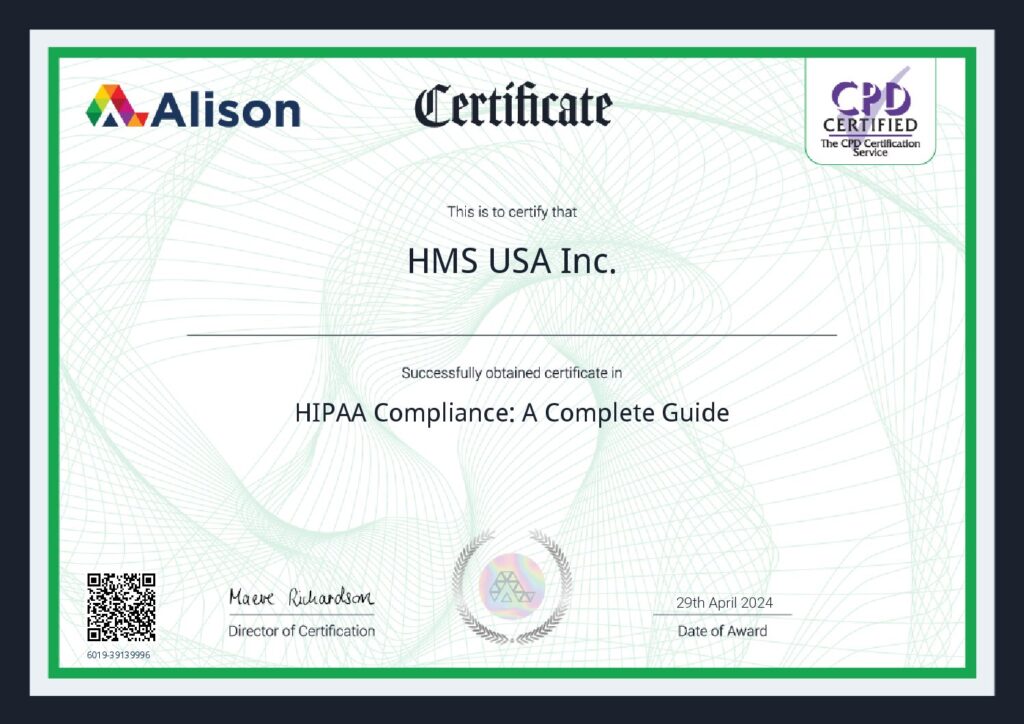
We do not use any off-the-shelf process. We create a payer matrix for your top payers, denial prevention logic for your claim scrubber and denial analysis for your top denial codes each month. All our team members are trained in HIPAA and compliance and all systems use encrypted file transfers and role-based access control. Our strategy is simple – file your claims right and respond consistently and truthfully. You retain control of your data, payers and patients.
Your biller needs to be able to prove themselves with numbers. HMS USA provides you with the metrics that measure your financial status: first-pass acceptance rate, denial rate per payer, days in accounts receivable, net collection rate and patient balance aging. These will show whether your revenue is flowing or stopping.
Since documentation requirements and the processing speed of Apple Health plans, Medicare Advantage plans and commercial payers are different, we measure each of them individually and detect any outliers early on. If a particular plan begins to deny certain procedure codes, we investigate the reason behind this, streamline our process accordingly and appeal those denied claims. With time, this approach helps us to decrease payment delays and stabilize our cash flow. Each report is provided in simple English along with suggested actions.

Speak with an HMS USA specialist today and build a billing plan around your goals.
Seattle-based billing partners normally bill a percentage of collections, ranging from four to eight percent depending on specialty, volume of claims and payers. The fee that HMS USA charges you is customized after analyzing your claims and will represent the true value of work done for you.
Yes. We file the Apple Health claims via ProviderOne and we coordinate the managed care process for filing claims, confirm eligibility with every visit and ensure that we file all our claims before the deadline. We do this not only for Medicare and commercial, but also for Medicare Advantage claims.
The onboarding process will take from two to four weeks. Your credentialing status will be verified, the connection between your EHR and the clearinghouse will be established, fee schedules will be evaluated and staff training will take place. In the meantime, we will manage your accounts receivable.
Yes. Outsourcing eliminates salaries, benefits, software and training in exchange for a single predictable fee. Small and solo practices can access certified coders, denial experts and reporting software without hiring any new employees, thus increasing collections as well as reducing administrative burden for your office staff in Seattle’s expensive labor market.
A billing audit involves comparing documentation, coding, modifications and payments to payer policies and coding guidelines. Areas of undercoding, overcoding, unbilled charges and denied claims are identified and we provide a prioritized action plan that helps you comply with payer policy, recover lost revenues and prepare for future payer record requests.
Yes. We use HIPAA privacy and security standards through the use of encrypted transfers, access control and business associate agreements. Our employees are trained regularly on compliance issues and all system activities are recorded to ensure protection of patients’ information.


 Trustindex verifies that the original source of the review is Google.
 Trustindex verifies that the original source of the review is Google.
 Trustindex verifies that the original source of the review is Google.
 Trustindex verifies that the original source of the review is Google.
 Trustindex verifies that the original source of the review is Google.
 Trustindex verifies that the original source of the review is Google.
 Trustindex verifies that the original source of the review is Google.
 Trustindex verifies that the original source of the review is Google.
 Trustindex verifies that the original source of the review is Google.
 Trustindex verifies that the original source of the review is Google.